
Ergonomics of the Home Kitchen
By Deanna Glus, OTD/S, CEAS, CEC/H
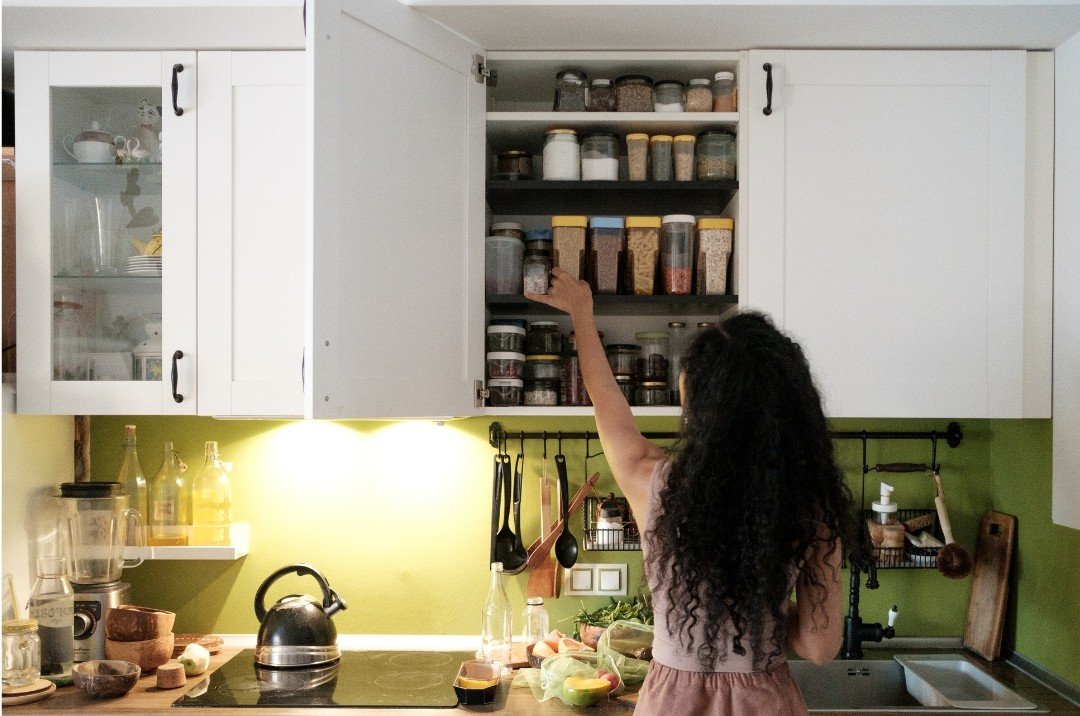
The kitchen is often one of the most frequented spaces in our homes, and it can also be the source of one of the most physically demanding parts of our daily routines. Meal preparation requires tasks such as reaching high and low to lift awkward appliances, carrying heavy groceries, gripping utensils and pans, and even full-body tasks like bending over to clean and load the dishwasher. When performed repetitively and incorrectly, these tasks are a recipe ripe for disaster. While these physical demands may not be difficult for you now, practicing safe kitchen ergonomics will help to remove long-term musculoskeletal risks from this part of your daily routine and keep you making your favorite foods as you age.
Kitchen ergonomics focuses on preventing unneeded stress on the body with the added benefit of reducing time and energy expenditure. Good goals to make for yourself in the kitchen are to prevent twisting, bending, or turning, especially while carrying items or doing these motions in quick succession. Other ergonomic risk factors that are found in the kitchen are prolonged standing, repetitive chopping and mixing, and reaching overhead into cabinets or downward into deep sinks.
Here are 7 tips for better ergonomics in the home kitchen:
1. The Kitchen Triangle Rule
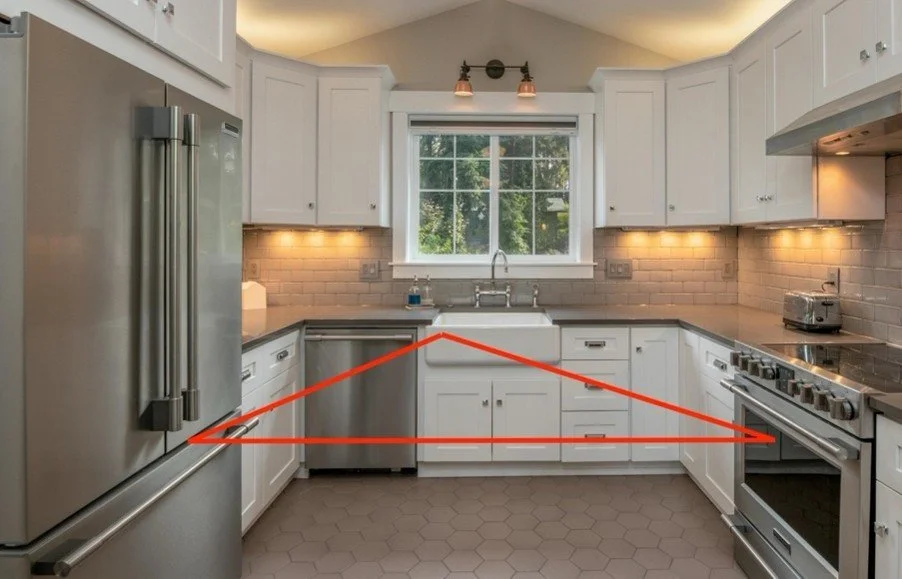
Arranging your sink, refrigerator, and stove in a triangular arrangement is the most common method of reducing unnecessary movement between workstations. This layout allows you to gather ingredients, cook, and clean with as little effort as possible.(2)
2. Counter Height
Most counters in home kitchens are usually 36” tall but can be manufactured 34-38” tall. The golden rule is that we want our counter height for meal preparation activities to be about 2-4” below the elbow while you are standing. Wheelchair accessible kitchen counters should be 28-34” tall.(3)
Fun fact: The recessed spot at the bottom of your cabinets is called a “toe kick”. It functions to let you stand as close to the cabinet as possible, reducing the need to bend over to reach the counter!(5)
3. Storage Rules
Storage in the kitchen is paramount for reducing strain on the body. When arranging appliances and supplies follow these rules to remove excess movement:
Store the items where they are used. For example, keep your utensil drawer closest to the stove so you can grab a spoon while your sauce is cooking.
Store items most often used on the counter or in an accessible drawer. Save the appliances that you only use once or twice a year for the cabinets that are harder to reach.
Reduce reaching above eye-level. If you must store objects in high cabinets, make sure those items are not heavy or an awkward in size.(1,4)
4. Choose your Tools Wisely
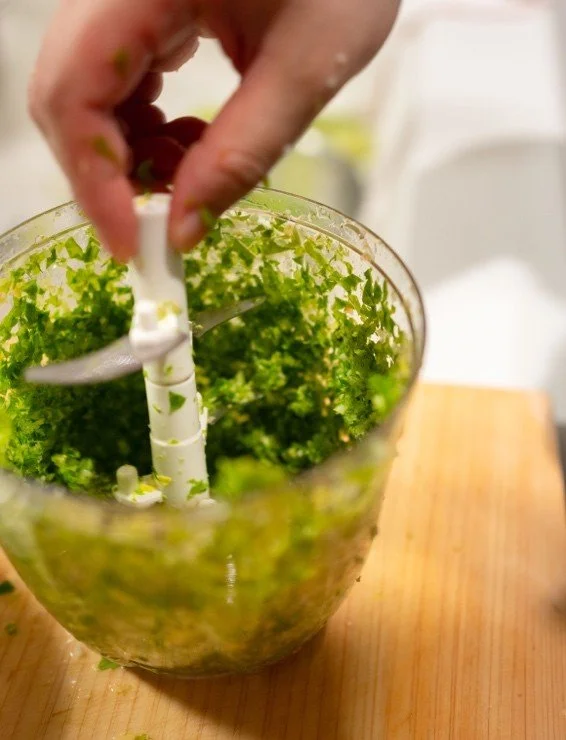
Work smarter, not harder! Use tools like food processors/ choppers, stand mixers, garlic press, and jar openers whenever possible to reduce grip force, repetitive motion, and awkward positions in the kitchen. When selecting knives and kitchen utensils, look for thicker handles, which makes it easier to grip. Other unique ergonomic solutions include angled tools and rocker knives, which allow for a more neutral wrist position while chopping.
Pro Tip: Use the right tool for the task. It makes cooking easier, reduces effort, and helps prevent strain and repetitive stress injuries. For example, a whisk is more effective than a fork for mixing batter, and kitchen shears work better than a knife for opening packages or cutting through poultry bones. Keep your knives sharp, and having a variety of knives and utensils on hand helps ensure you're using the best tool for each job.
5) Lighting is Key
As with any work that is occurring with sharp and hot objects, make sure that your kitchen lighting is bright enough to see with accuracy. Using LED strip or puck lights under cabinets is a great way to add cost-efficient extra lighting.(4)
6) Carrying and Lifting
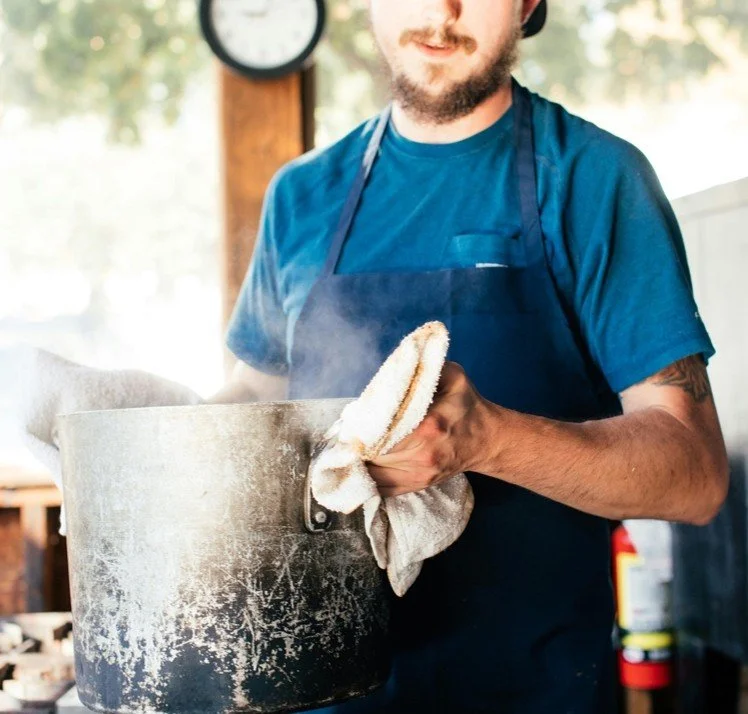
Carry heavy pots and pans closer to the body with your elbows at 90 degrees rather than at arm’s length. This will be more stable and will be easier to handle the load. While retrieving items from the oven, bending to pick up a sack of flour, or loading the dishwasher, keep your back flat and hinge at the hips to bend over. Doing this protects your spine from unnecessary strain and allows the larger muscles of your legs to do the work.
7) Take a Break!
Kitchens get hot and stuffy, especially when cooking for large groups of people. Make sure that the kitchen is well ventilated and that you have a chance to hydrate and rest. While doing repetitive tasks such as washing and stirring, switch hands if you feel safe to do so. When repetitively chopping or grating ingredients, make sure you take breaks from that task for a few minutes. This will reduce the amount of physical fatigue and strain your body experiences, which will help reduce the chance of injury.
If a kitchen redesign is not in the cards for you, don’t fret! Focus on tips 3-7 to maximize your space and your ergonomic safety within the kitchen. Creating the habits of performing safe lifting and bending techniques, storing items in the appropriate areas based on their size and weight, and taking care of how your body functions in the kitchen are great opportunities to reduce your ergonomic risks in the kitchen. Happy cooking!
Sources:
Dinesh, S. (2024). Kitchen ergonomics. In Healthy habits: A way of life (Chap. 20). Noble Science Press. https://doi.org/10.52458/9788196897444.nsp2024.eb.ch-20
Maytag. (n.d.). What is the kitchen work triangle? https://www.maytag.com/blog/kitchen/kitchen-work-triangle.html
Distinctive Kitchen. (2025). Optimal countertop height guide for every space. https://distinctivekitchen.com/optimal-countertop-height-guide-for-every-space
Naked Kitchens. (2024). Kitchen ergonomics: Make your kitchen more efficient. https://www.nakedkitchens.com/us/blog/kitchen-ergonomics-make-your-kitchen-more-efficient
Wiebe, S. (2025). The importance of toe kicks in kitchen cabinetry. Decor Cabinets. https://decorcabinets.com/blog-toe-kick-in-kitchen-cabinetry/