Does Ergonomics Really Work? What the New Cochrane Review Does—and Doesn’t—Tell Us

A new Cochrane review is raising an important question for employers and ergonomics professionals: Do workplace ergonomic interventions actually work?
Published October 28, 2026, the updated systematic review examined ergonomic interventions for adults with work-related complaints of the arm, neck, and shoulder. Across 20 studies involving 2,478 workers, researchers found that ergonomic interventions may make little or no difference in short-term pain and probably make little or no difference in function, recovery, or sick leave when compared with no treatment or usual care.
The findings are worth examining, particularly in the context of what the review was designed to study.
What Did the Review Actually Study?
The review focused on workers who already had arm, neck, or shoulder complaints and evaluated whether ergonomic adaptations could help manage those existing problems.
The interventions varied considerably and included:
Adjusting workstation height and layout
Changing chairs or computer equipment
Providing ergonomic or biomechanical education
Encouraging changes in posture or work behaviors
Thirteen of the included studies involved computer or office workers, while seven involved workers in settings such as factories, sewing operations, and slaughterhouses.
The review was primarily examining ergonomics as an intervention for existing musculoskeletal complaints. It was not designed to evaluate whether comprehensive professional ergonomics services can identify and reduce workplace exposures or prevent musculoskeletal injuries.
An “Ergonomic Intervention” Is Not the Same as Professional Ergonomics Services
The definition of an ergonomic intervention is important when interpreting this research.
In a research study, an ergonomic intervention may refer to a specific change: providing a new chair, adjusting a workstation, changing a keyboard or mouse, modifying workstation dimensions, or providing ergonomic education.
Professional ergonomics services typically involve a broader assessment and intervention process.

A qualified ergonomics professional evaluates the interaction between the worker, task, equipment, environment, and organization. Rather than beginning with a predetermined solution, the process begins by identifying the exposures and demands associated with the work.
Depending on the setting, this may include evaluating:
Force
Repetition
Posture
Duration
Contact stress
Manual material handling
Work-rest patterns
Equipment design
Workflow
Environmental factors
Organizational conditions
Based on the assessment, the ergonomics professional can identify appropriate controls. These may include engineering changes, equipment redesign, changes in work methods, administrative controls, employee education, movement strategies, or a combination of approaches.
Implementation, follow-up, and evaluation of outcomes are also important components of the process.
An ergonomic intervention is something that is implemented. Professional ergonomics is the process used to determine what should be implemented, why, and whether it worked.
This becomes relevant when interpreting studies that evaluate a standardized intervention across a group of workers. If the primary exposure contributing to a worker's problem has not been identified or meaningfully changed, a single equipment or education intervention may have limited effects on pain or disability.
Ergonomics Is Not Just Equipment
Employers should be cautious about equating ergonomics with purchasing equipment.
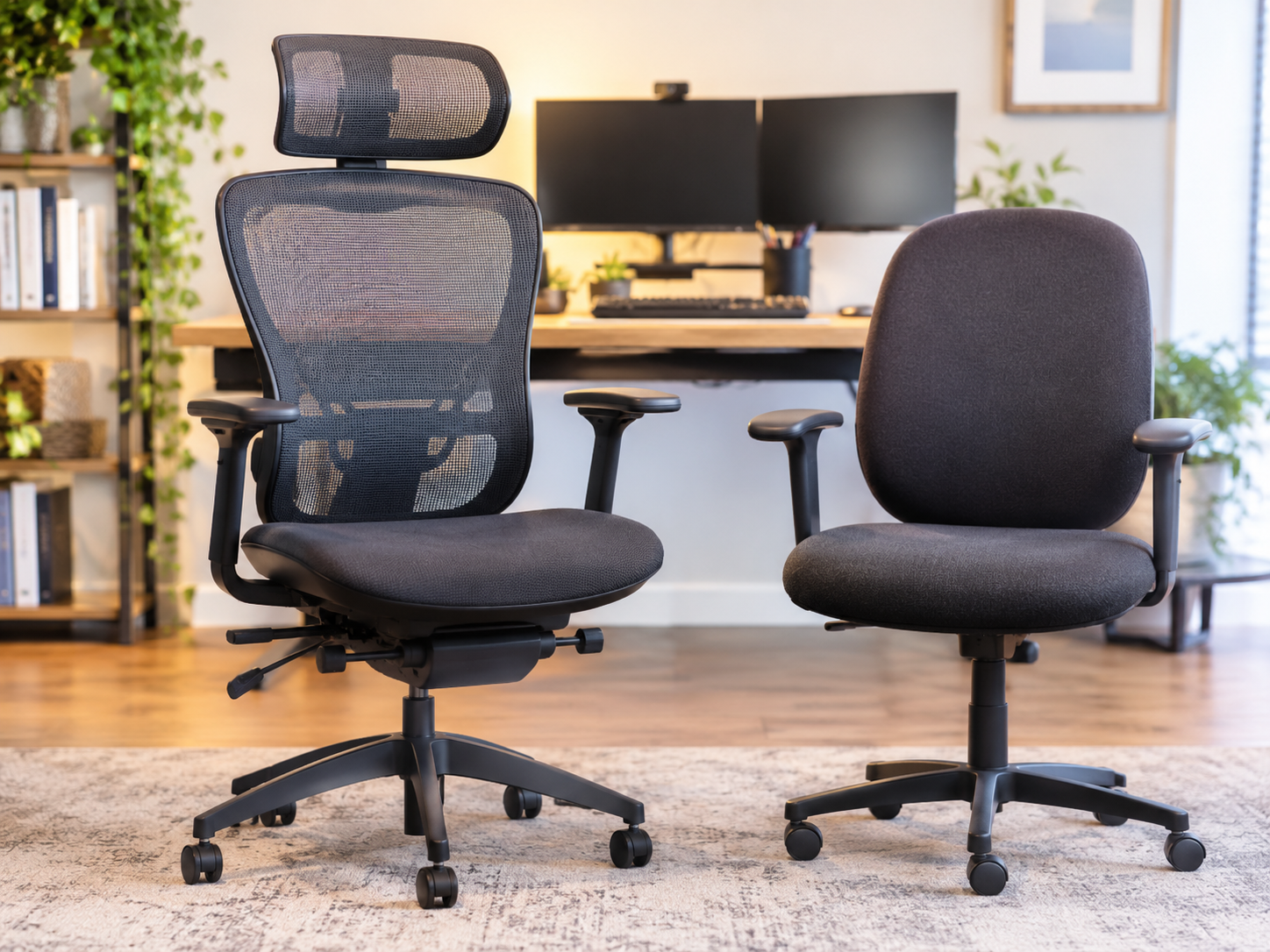
An ergonomic chair, sit-stand workstation, keyboard, mouse, or workstation adjustment may be appropriate for an individual worker, but equipment alone does not necessarily address all of the factors contributing to musculoskeletal risk.
Work-related musculoskeletal disorders are influenced by exposure to factors such as force, repetition, awkward or sustained postures, duration, recovery time, work organization, and individual and environmental factors.
A comprehensive ergonomics program looks beyond the workstation and considers questions such as:
What is driving the exposure?
Can the exposure be eliminated or reduced?
Can the task or equipment be redesigned?
How frequently and for how long is the worker exposed?
Are there opportunities for recovery or variation?
Did the intervention reduce the identified risk?