
The Perfect Workstation Isn’t Enough: The Role of Movement in Office Ergonomics
When we think about office ergonomics, we often focus on the workstation: an adjustable chair, a monitor positioned at an appropriate height, and a keyboard and mouse placed within comfortable reach.
Proper workstation setup is an important part of reducing musculoskeletal risk, but it is only one component. Recent research continues to examine another factor: the amount of time workers spend sedentary or in relatively static positions throughout the workday.
A well-adjusted workstation can reduce awkward postures and unnecessary physical demands. However, even a well-designed workstation cannot eliminate the effects of remaining in the same position for extended periods.
New Research on Sedentary Work and Musculoskeletal Health
A 2026 meta-analysis published in BMC Musculoskeletal Disorders examined the relationship between sedentary behavior and musculoskeletal disorders (MSDs) in the workplace.
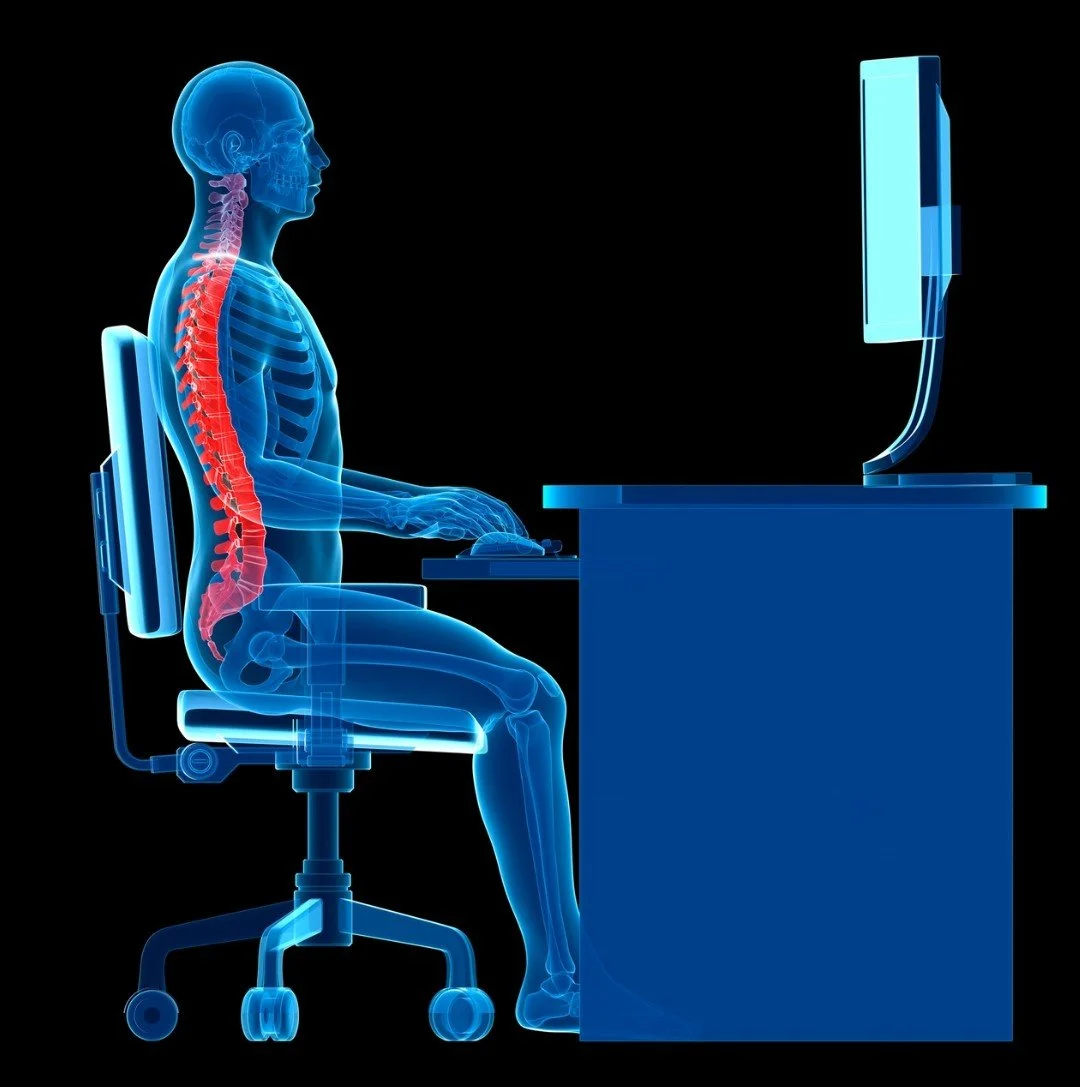
Researchers conducted a systematic search across six major databases and included 33 studies in the meta-analysis. They also analyzed 75 studies to identify common themes related to prevention.
The findings support an association between prolonged sedentary behavior and musculoskeletal symptoms across multiple areas of the body. The researchers also identified several recurring prevention strategies, including ergonomic workstation improvements, posture assessment, intermittent standing or exercise, ergonomic training, and consideration of individual health factors.
These findings support a broader approach to office ergonomics that considers both workstation design and patterns of physical exposure throughout the day.
Looking Beyond Neutral Posture
Neutral positioning remains an important ergonomic principle. A workstation that supports the body and minimizes awkward or sustained postures can reduce unnecessary physical demands.
However, posture is only one part of an employee's overall exposure.
Consider two employees using similar ergonomic workstations. One changes position regularly, gets up periodically, walks between meetings, and alternates tasks throughout the day. The other spends several hours working in essentially the same position.
Although their workstations may be similar, their physical exposures throughout the day are different.
A comprehensive ergonomic assessment should therefore consider several factors:
Duration: How long is a position or activity maintained?
Frequency: How often does the exposure occur?
Repetition: Are the same movements or muscle groups being used repeatedly?
Recovery: Are there opportunities to change position or take a break from the exposure?
Variability: How much does the worker change positions, movements, and tasks throughout the day?
Rather than identifying a single ideal posture that should be maintained throughout the day, office ergonomics should provide employees with options to adjust their position and incorporate movement into their work routines.
Sitting Versus Standing
Reducing sedentary time does not mean that employees should simply replace prolonged sitting with prolonged standing.

Standing for extended periods can also contribute to discomfort and physical fatigue. The goal is to provide opportunities for employees to alternate positions and avoid remaining static for long periods.
Depending on the job and work environment, this may include sitting for certain tasks, standing for others, walking during appropriate phone calls, changing position between meetings, or taking brief movement breaks.
Sit-to-stand workstations can support this approach, but providing adjustable equipment alone does not ensure that employees will change positions. Education and work routines should help employees understand how to use available equipment and incorporate position changes throughout the day.
Practical Strategies for Employers
Organizations can address prolonged sedentary work through relatively simple changes to the work environment and workday.
Incorporate Microbreaks
Brief movement breaks can be incorporated throughout the day without requiring long interruptions to work. Employees may stand, walk briefly, stretch, or change position between tasks.

Microbreaks can be particularly useful during periods of computer-intensive work or back-to-back virtual meetings.
Integrate Movement Into Existing Work
Movement does not always need to be scheduled as a separate exercise break.
Walking meetings, standing during appropriate calls, walking to speak with a colleague, changing work locations, or completing certain tasks away from the primary workstation can introduce more physical variability into the day.
Provide Opportunities to Change Position
Adjustable workstations, sit-to-stand desks, alternative work areas, and properly selected seating can give employees more options for changing position.
When organizations provide adjustable equipment, employees should also receive education on how to use it appropriately. Ergonomic equipment is most effective when workers understand how and when to adjust it.
Evaluate the Workday, Not Only the Workstation
A traditional workstation assessment may focus on chair height, monitor position, keyboard and mouse placement, and other physical characteristics of the workstation.
These remain important, but additional questions can provide a more complete picture of an employee's exposure:
How long does the employee typically work without changing position?
How many back-to-back meetings occur during the day?
Does the employee have opportunities to alternate between different types of tasks?
Does the job naturally provide opportunities to stand or walk?
Do workload, scheduling, or productivity expectations make it difficult for employees to take brief breaks?
Considering these factors allows ergonomic programs to address both the physical workstation and the way work is organized.
Sedentary Exposure in Hybrid Work
Sedentary behavior may be particularly relevant for hybrid and remote employees.
A separate 2026 study examining physical activity, sedentary behavior, and musculoskeletal symptoms among hybrid office workers found high levels of sedentary time and differences in sitting patterns between home and traditional office work.
Remote employees may have fewer natural opportunities for movement than they would in a traditional office. Walking to conference rooms, visiting a coworker's desk, commuting, and moving between different areas of a workplace may be reduced or eliminated when work occurs primarily at home.
For organizations with hybrid employees, providing appropriate home-office equipment is an important starting point. Ergonomic programs should also address movement, work routines, microbreaks, activity integration, and early reporting of discomfort.
Expanding the Approach to Office Ergonomics
Current research supports an approach to office ergonomics that extends beyond workstation setup.
A comprehensive program should consider how employees interact with their work environment over the course of the day, including posture, duration of exposure, repetition, movement opportunities, task variation, and recovery.
The objective is not to eliminate sitting or require employees to move constantly. It is to reduce unnecessary prolonged static exposure while providing employees with practical opportunities to vary their positions and activities.
A properly adjusted workstation remains an important component of office ergonomics. Combining appropriate workstation design with movement and position variability provides a more complete approach to supporting musculoskeletal health in the workplace.
References
Du, Z., Xiong, C., Li, T., Huang, J., & Shimomura, Y. (2026). Impact and prevention of sedentary behavior on musculoskeletal disorders in the workplace: A meta-analysis and LDA topic model. BMC Musculoskeletal Disorders, 27, 635. doi:10.1186/s12891-026-09974-9.
Parés-Salomón, I., Cirera-Viñolas, E., Coffey, A., et al. (2026). The associations of sedentary behaviour and physical activity with musculoskeletal symptoms in hybrid office workers: A compositional data analysis. BMC Public Health, 26. doi:10.1186/s12889-026-28107-4.